
Career guide

Deck Cadet vs GP Rating - career comparison

A practical comparison of deck cadet and GP rating pathways covering training, salary direction, first-job reality, promotion, and long-term fit.

GuideCareer comparisonFreshers decision guideRO

The core difference in career direction

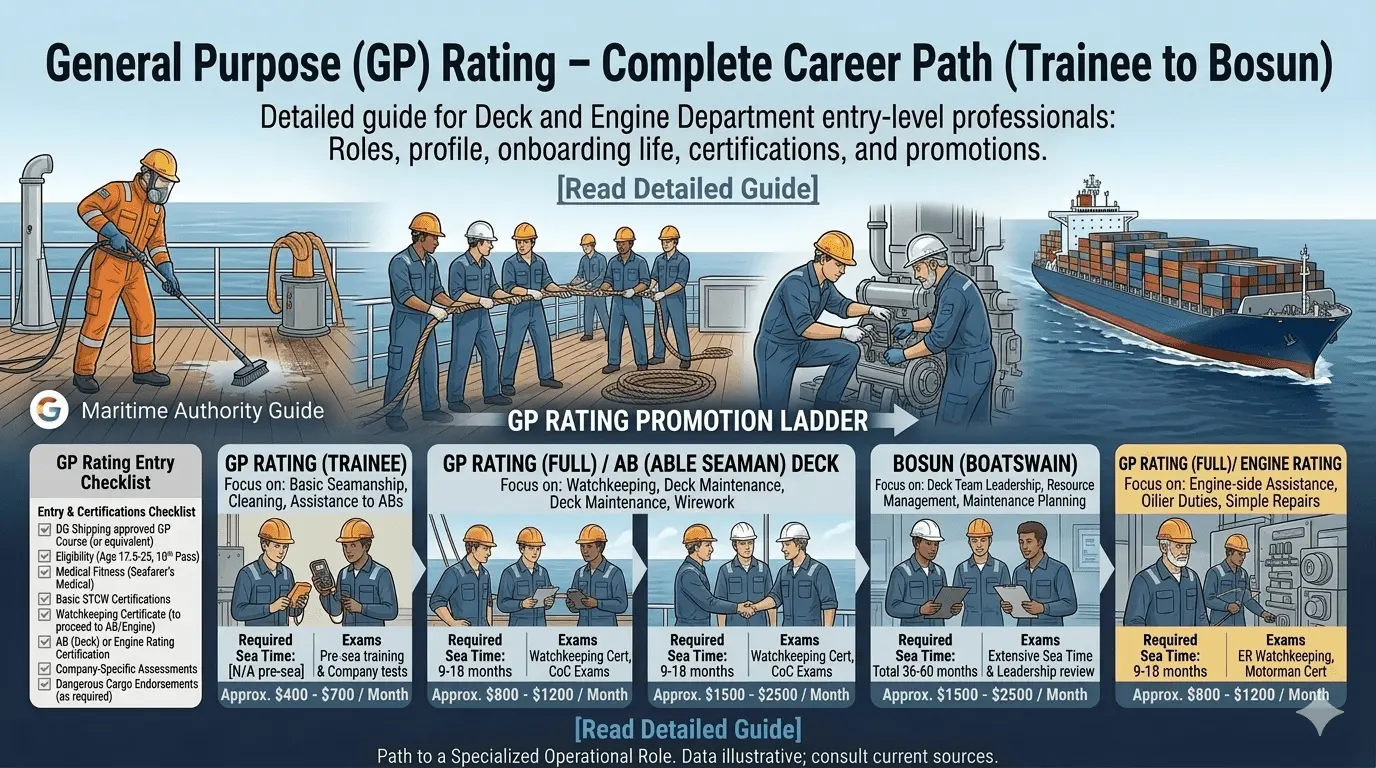
Deck cadet is an officer-training route. GP Rating is a ratings route that supports deck and engine operations depending on company practice. Both can lead to successful sea careers, but they are not interchangeable. One is usually chosen by candidates targeting officer progression, while the other often fits candidates seeking a practical and faster operational entry route.

The right choice depends on your education pathway, budget, patience for promotion, and whether you want a long officer track or a ratings-first route with different earnings and promotion dynamics.

Training and entry requirements

Deck cadet pathways usually expect nautical training aligned to officer development. GP Rating pathways are generally more practical and ratings-oriented. The cost, study structure, and time before the first contract can feel very different between the two.

Candidates should be honest about what they can realistically complete and sustain. Choosing a path mainly because someone online said it pays more can backfire if the training or progression model does not fit your situation.

First-job reality and joining speed

A deck cadet may accept lower first-contract pay in exchange for officer sea time and future promotion upside. A GP Rating candidate may sometimes find a more practical first operational joining route, though that depends heavily on company demand and document readiness.

This is why first salary alone is a poor decision tool. The more useful comparison is which path gives you the strongest mix of realistic joining chance, long-term progression, and fit with your strengths.

Salary and long-term earning potential

GP Rating can be attractive because a candidate may compare it with cadet stipends and feel it is the better short-term choice. But deck cadet usually carries stronger officer-level long-term earning upside once promotion starts happening.

The better question is not who earns more in the first contract. It is how the earning curve changes over three, five, and eight years if the candidate performs well and stays on the path.

  • GP Rating may offer a more practical early operational route.
  • Deck Cadet often has lower early pay but stronger officer upside.
  • Both routes still depend on good employers, sea time quality, and promotion discipline.

Work style and onboard responsibilities

Deck cadets work inside an officer-learning environment, with a training record, bridge exposure, cargo learning, and long-term certification planning. GP Rating roles are more hands-on support roles shaped by crew routine, maintenance, mooring, and general operations.

Some candidates enjoy the structured officer development route. Others prefer a more direct practical role. Neither is automatically better. The fit depends on personality, patience, learning style, and long-term goals.

How to decide more honestly

Choose deck cadet if you are prepared for the officer path, can handle the training route, and are thinking beyond the first salary slip. Choose GP Rating if the ratings route fits your current training, budget, timeline, and operational preference better.

If you are still unsure, compare current cadet jobs, GP Rating jobs, company pages, and the salary guide together. A better decision comes from real market context, not from slogans about which path is better.

Best follow-up pages for this decision

Related ship job searches

Related maritime guides

Next steps