
Przewodnik kariery

Jak zostac kadetem pokladowym

Praktyczny przewodnik startowy dla poczatkujacych, ktorzy szukaja pierwszej okazji kadeta na statku.

GuideCadet pathwayFirst contract preparationPL

What a deck cadet actually does

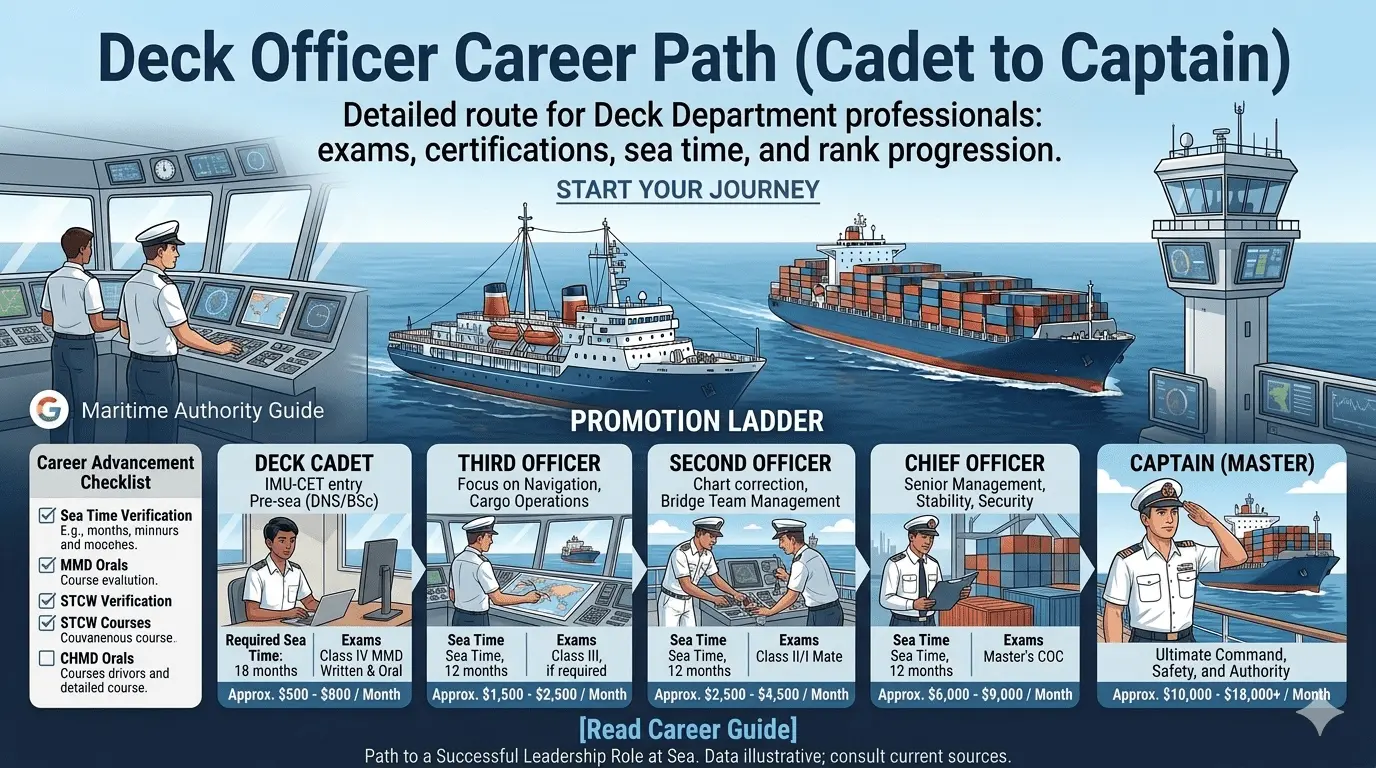
A deck cadet is a trainee officer who joins a vessel to build sea time, learn bridge watchkeeping routines, understand cargo operations, and follow the onboard training record required for later certification. The role is not only about standing on the bridge. Cadets also assist with mooring, maintenance planning, navigation preparation, safety drills, documentation, and learning how deck departments work under the master and chief officer.

Most companies expect deck cadets to arrive with the right mindset rather than deep shipboard experience. Discipline, punctuality, willingness to learn, and the ability to follow instructions safely are often more important in a first contract than trying to sound overconfident in an interview.

Basic eligibility and certificates

Most deck cadet opportunities ask for approved maritime education, STCW basic safety training, a valid passport, medical fitness, and a CDC or seaman book where required by the flag or employer. Some employers also ask for INDOS, national licence documents, yellow fever vaccination status, or sponsor approval depending on your country and college pathway.

Before applying, confirm what is already mandatory in your market. A common mistake is sending applications without checking whether your medical, passport validity, or safety courses are current. Even strong candidates get delayed when their documents expire too soon for a joining window.

How shipping companies shortlist cadets

Crewing teams usually shortlist cadets by looking at training background, document readiness, English communication, discipline, and whether the candidate appears join-ready. They often compare colleges, cadet sponsorship history, location, and how professionally the CV and email are presented.

For cadets, a short and clean CV is usually stronger than a long one. Include your maritime course, certificate list, passport and CDC status, contact details, and any simulator, workshop, or onboard familiarization experience. If you have internship, workshop, or campus placement exposure, mention it clearly instead of using generic objective statements.

How to prepare for your first application

Create one folder with clearly named PDFs: passport, CDC, STCW courses, medical, mark sheets if relevant, and a one-page CV. Keep file names simple so a recruiter can understand them instantly, such as Passport-Name.pdf or STCW-BSTS-Name.pdf. This sounds small, but good document hygiene improves response time from crewing offices.

When you apply, target companies that actually hire cadets in your fleet segment instead of sending the same email to every company online. Use company pages to check whether they manage container, tanker, bulk, offshore, or mixed fleets, and whether they have a pattern of taking cadets. Focused applications usually perform better than mass outreach.

Common mistakes that delay a first contract

Many freshers apply too early with incomplete documents, poor-quality scans, unprofessional email IDs, or CVs that hide the most important facts. Others apply to senior officer roles by mistake, or send generic messages that do not mention cadetship, certificate status, or availability to join.

Another common mistake is not preparing for the interview stage. Cadets should be ready to answer basic questions on COLREG awareness, safety culture, why they chose deck, what vessel types they prefer, and how they will adapt to life on board. Honest, simple answers are usually stronger than memorized speeches.

What to expect after selection

A first cadet contract can feel demanding because everything is new: hierarchy, watch schedules, safety routines, discipline, and life away from home. Your first goal is not to impress everyone by talking a lot. It is to listen well, follow procedures, learn consistently, and protect your training record and safety habits from day one.

If you keep your documents ready, target realistic employers, and apply consistently through verified pages, the path becomes much clearer. Treat the first contract as the start of a long officer career, not as a one-time placement. The strongest cadet candidates show long-term seriousness even before they join.

Related ship job searches

Related maritime guides

Guide FAQ

What does this guide help with?

A practical starting guide for freshers who want their first shipboard cadet opportunity.

Who should read this How to become a deck cadet?

This page is useful for seafarers, cadets, engineers, ratings, and maritime job seekers who want clearer research and application guidance before they apply.

What should I open after reading this guide?

Use the related job pages, company pages, and connected maritime guides linked on this page to continue from research into live job discovery and better-targeted applications.

Next steps

How to Become a Deck Cadet | JobInShip